
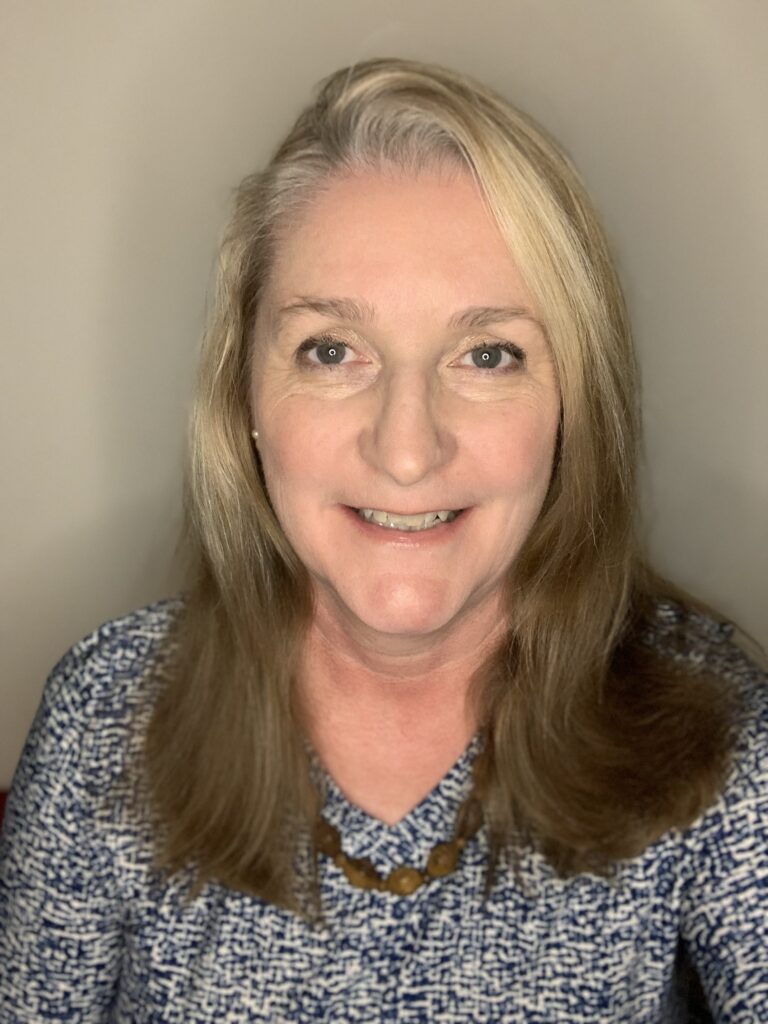
Kona Lisa Mahu
Kona Lisa Mahu is the author of the physical book titled “Living Simply in a Complicated World: My Rule of Life”.

Humans on the Threshold — Who Will Help Guide the Way?
Throughout human history, people have experienced some form of relationship with the divine, the cosmic, or the unseen dimensions of existence. Archaeological discoveries, sacred texts, oral traditions, and personal experiences all point toward humanity’s enduring awareness that we are connected to something greater than ourselves.
There have been periods of remarkable human advancement and periods of deep decline. Yet through it all, humanity has never truly been alone.
Here at the Center for Planetary Management, we believe humanity exists within a vast and sophisticated universe of sentient life and spiritual intelligence. What many people are experiencing today is an awakening to that greater connection — a growing awareness that reality may be far larger than we once imagined.
Evidence of this awakening appears in many forms: conversations about UFO’s and extraterrestrial life, renewed interest in consciousness and channeling, spiritual experiences outside traditional religious structures, and a deep longing for meaning in a rapidly changing world.
Human beings connect to each other — and to the divine — in many different ways. Part of our collective evolution may be recognizing that there is not only one “right” path for every person.
One of humanity’s greatest challenges has been the attempt to force everyone into a single spiritual, cultural, or ideological framework. But what if human beings are not all at the same place in their development? Just as children and elders exist side by side, people at different stages of growth, understanding, and spiritual awareness also exist side by side.
Growth is part of the human journey.
We also recognize that no single tradition, culture, philosophy, or organization holds the complete picture of humanity’s relationship with the divine. Each perspective offers part of a greater mosaic of understanding. At Center for Planetary Management, we see ourselves not as the center of that picture, but as one contribution among many in humanity’s ongoing search for wisdom, meaning, and conscious evolution.
This is why free will and the ability to make personal choices are so important. Guidance may be necessary while people are learning and growing, but ultimately each person must choose their own path.
Across cultures and throughout history, teachers and wisdom traditions have attempted to guide humanity toward greater compassion, responsibility, and awareness. The Golden Rule — found in many traditions around the world — is one example of a universal teaching intended to support human evolution.
Yet humanity still struggles with greed, domination, and the misuse of power. Many systems originally created to help people have themselves become sources of control, division, or harm.
Religion, unfortunately, has sometimes participated in this distortion.
At the Center for Planetary Management, we are not anti-religious. We believe religion has served important purposes throughout human history. However, we also believe humanity’s understanding of spirituality must continue to evolve.
We use the term Celestials to describe divine or higher-dimensional beings who work in support of humanity’s growth and development. In our understanding, these beings honor free will above all else. Guidance is offered — never forced.
This principle of non-coercion is central to how we understand our relationship with the divine.
For us, worship remains a deeply personal experience connected to what we refer to as the First Source and Center — the originating source of all life. Even Jesus taught that worship belongs ultimately to the Father.
So, who is Jesus within our framework?
We recognize Jesus as a divine being who lived on Earth in human form — both to experience humanity directly and to fulfill a larger purpose connected to the development of this local universe. We understand him not only as a historical figure, but as part of a much larger cosmic story.
And perhaps that story is far bigger than humanity has yet understood.
Questions that many people carry — consciously or unconsciously — begin to emerge:
- What happens after death?
- What did Jesus mean when He spoke of “many mansions” in the Father’s house?
- Are there dimensions of existence beyond our current understanding?
- Are angels, celestial beings, or spiritual intelligences real?
For some readers, these questions may feel uncomfortable or implausible. For others — whether religious, spiritual, agnostic, or newly awakening — they may feel deeply familiar.

Part of our knowledge base comes from texts such as The Urantia Book. Part comes from previous religious traditions and personal spiritual experiences. Most importantly, much of our understanding comes through the shared experiences of individuals working together in what we describe as a co-creative relationship with the divine.
We found each other through this work. And perhaps, by reading this publication, you have found us as well.
At its core, the mission of Center for Planetary Management is simple: to help lay a foundation for humanity’s next stage of ethical and spiritual development.
We believe humanity is moving through a profound transitional period, and that greater awareness, wiser decision-making, and values-centered living will be essential for the future.
The guidance we share is not intended to control belief, but to encourage reflection, growth, and conscious choice.
At the center of this work are seven core values we believe are innate within every human being. These values help guide better decisions, healthier relationships, and more sustainable futures.
The framework is intentionally simple:
- Use free will responsibly
- Live by the Seven Core Values
- Make better decisions
- No dogma.
- No coercion.
- No demand for conformity
Everything shared through Planetary Pulse and the Center for Planetary Management is intended to support that journey of growth and awareness.
If something in these pages resonates with you, we invite you to subscribe and continue exploring with us.
Wherever you are on your journey, may you move forward with wisdom, courage, and compassion.
Blessings,
Kona Lisa Mahu
Center for Planetary Management