The Door Closed: How inherited beliefs, lived experience, and ethical discernment shape human growth
When I was a kid, I witnessed a conflict between my mother and grandmother that would shape how I understood ethics for the rest of my life. The story goes something like this… and remember I was a kid (50+ years ago), so the story is told in the language we used at the time.
The Door Closed
As a child, I did not understand what had happened.
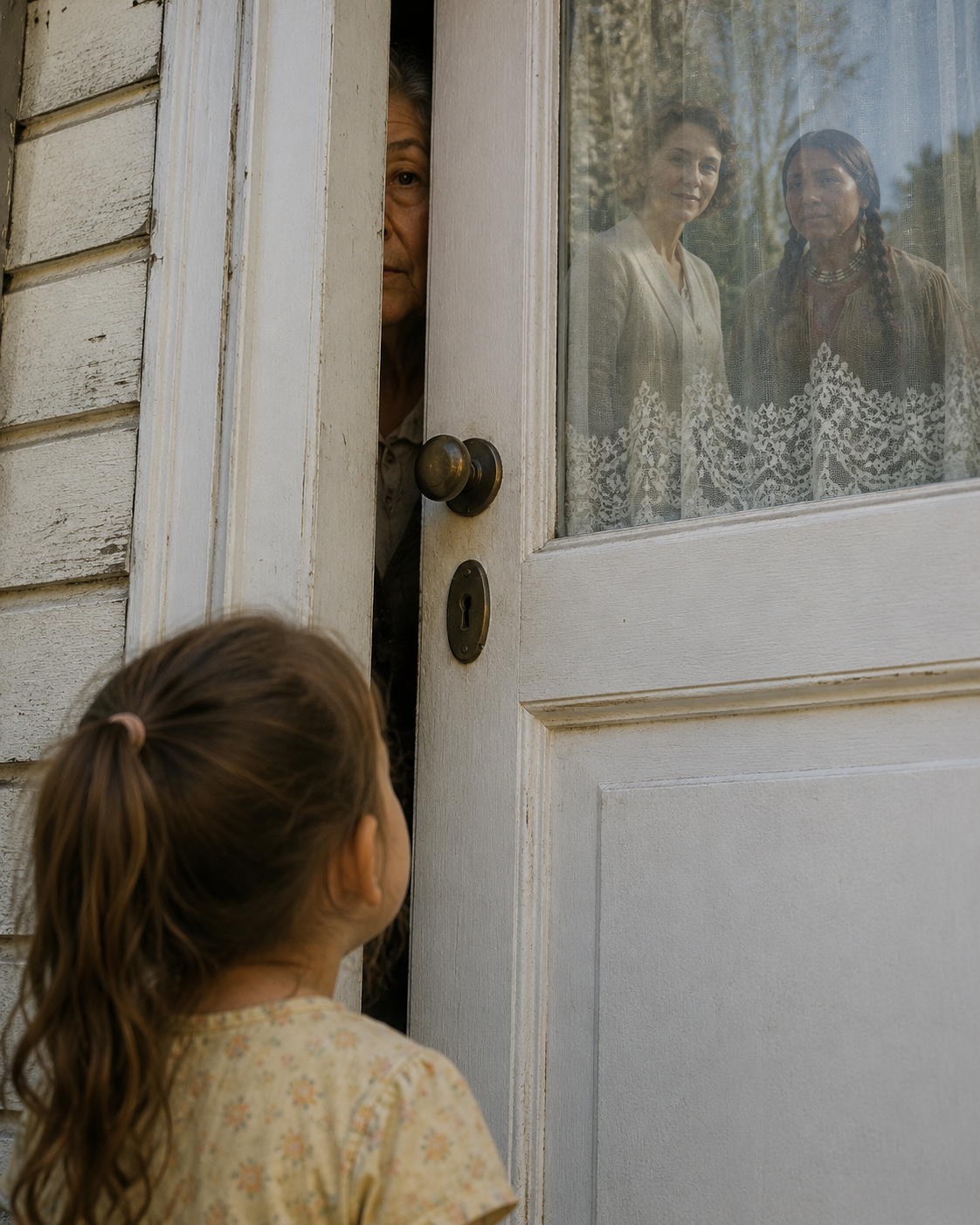
My mother, one of her friends, and I had stopped by to visit my grandparents. They owned the local restaurant, and I was a familiar fixture there. I had spent countless hours roaming through the restaurant and the apartment in the back.
But on that day, my grandmother opened the door only a few inches, looked outside, and told us we were not welcome. The door closed.
Later, I asked my mother why.
“It was because of my friend,” she said. “She’s an Indian.”
I was confused.
My mother explained that when she was growing up, she had been taught that Indians were not really human.
I didn’t really understand what she was getting at.
She saw the confusion on my face. “One day I saw an Indian woman crying.”
“Why was she crying?”
“I don’t know,” my mother replied. “And it doesn’t matter.” I looked at her, wondering.
“What mattered was that when I saw her crying, I knew everything I had been taught was wrong. She was human. She cried just like I cried. Lisa, Indians bleed the same red blood we bleed.” I sat with that for years. It had never occurred to me to think in these terms, so I wasn’t sure what to do with this information.
Four years later my mom was getting married again. There was some discussion about how my grandmother would react to the “Blacks” who would be present – I mean they were going to be part of our new family. My stepdad’s family was both black and white, and I had soon-to-be cousins who were mixed.
My grandmother was there. She came. But this time she seemed comfortable speaking with everyone. I was amazed.
Something had changed.
The Stories We Inherit
So, what does this story have to do with ethics and morality? My grandmother did not create the beliefs she carried. She inherited them. Like most people, she learned them from family, community, our culture, and the stories that surrounded her while growing up. Human beings are storytelling creatures. Long before children understand philosophy, politics, religion, or ethics, they learn stories about who they are, where they belong, whom they can trust, and how the world works. These stories help communities survive. They provide identity, cohesion, and a shared understanding of reality. Over time, these shared stories become moral frameworks. They shape our understanding of right and wrong, good and bad, acceptable and unacceptable, safe and dangerous. This is how morality often develops. Long before we can make independent ethical decisions, we absorb the values, assumptions, and expectations of the communities around us. We learn what behaviors are rewarded, what behaviors are discouraged, and what beliefs define membership within the group. These shared moral frameworks serve an important purpose. They help communities maintain order, transmit wisdom, preserve culture, and create a sense of belonging. Most of the time, we do not question them. In fact, questioning inherited beliefs can feel threatening because those beliefs are often tied to our identity, our relationships, and our sense of security. As long as the stories we inherit continue to match our experience, there is little reason to examine them.
When the Story No Longer Fits
Eventually, however, many people encounter something their inherited story cannot explain, like my mother and grandmother. My mother’s actions may have been the catalyst for my grandmother’s transformation. For my mother, it was an Indian/Native American woman crying. For others, it may be a friendship, a scientific discovery, a social change, a spiritual experience, or a personal crisis that is located outside of inherited stories or cultural norms. The contradiction itself is rarely enough to transform us, but it creates a crack in certainty. If we remain open, one contradiction is often followed by another until the old story can no longer contain what we have learned. My mother encountered such a moment when what she experienced no longer matched what she had been taught. Moments like these can challenge the stories we carry about ourselves and the world. Then, we are faced with a choice. Do we cling to the story we inherited? Or do we begin the difficult work of re-examining what we believe and why? What we do next often determines whether our inherited beliefs remain unchanged or continue to grow alongside our experience. That question lies at the heart of the relationship between morality and ethics.
Morality and Ethics
My mother’s experience illustrates a challenge that arises when inherited beliefs no longer explain lived experience.
The moral beliefs we inherit often provide clarity, stability, and a sense of belonging. There is nothing inherently wrong with this. Every family, culture, religion, and society passes values from one generation to the next.
The difficulty arises when life presents us with situations those inherited answers cannot adequately explain.
My mother had been taught one thing. Her experience showed her another. In that moment, she faced a choice that many people encounter when reality challenges what they have always believed:
Should she trust what she had been told, or what she had seen?
Whether we recognize it or not, life occasionally confronts us with experiences that do not fit neatly within our existing beliefs.
A relationship challenges a stereotype. A personal experience contradicts a political belief. A scientific discovery unsettles a religious assumption. A social change forces us to reconsider long-held traditions.
When this happens, certainty becomes more difficult to maintain.
This is often where morality and ethics begin to diverge.
Morality frequently provides answers.
Ethics helps us navigate questions.
Morality tells us what a group believes to be right or wrong. Ethics begins when those answers prove insufficient for the complexity of the situation before us.
Rather than providing immediate certainty, ethics asks us to remain present long enough to examine competing values, conflicting evidence, and uncertain outcomes.
This process can be uncomfortable. We often prefer simple answers and clear boundaries.
Yet ethical growth rarely occurs in certainty. It emerges through discernment. It develops when we are willing to hold tension, ask deeper questions, and allow experience to challenge what we thought we knew.
Humanity at a Threshold
Today, humanity finds itself in a similar moment.
The challenge before us is not simply political, economic, technological, or spiritual.
It is ethical.
How do we respond when the world we experience no longer matches the stories we inherited?
How do we translate our values into decisions when facing uncertainty, competing priorities, and rapid change?
And perhaps most importantly:
How do we remain human while navigating a future unlike anything humanity has faced before?
Finding Our Bearings
When inherited answers no longer seem sufficient, it can feel as though the ground beneath us is shifting.
Yet ethical discernment does not require us to navigate blindly.
Across cultures, spiritual traditions, and generations, certain values continue to emerge as essential to human flourishing. They remind us what supports life, strengthens relationships, nurtures growth, and sustains healthy communities.
While people may disagree about policies, ideologies, or beliefs, they often unknowingly share deeper aspirations: a desire for life, well-being, growth, fairness, compassion, and meaningful relationships.
These values do not eliminate complexity.
They provide orientation within it.
Like a compass, they do not tell us every step to take. They help us determine whether we are moving toward greater human flourishing or away from it.
More often, growth emerges through curiosity, humility, dialogue, and the willingness to learn from experience.
This is the work of ethics.
Not the abandonment of values, but the continual effort to live them wisely.
Not the rejection of tradition, but the courage to examine whether our traditions still serve life, dignity, and human flourishing.
Not the search for perfect answers, but the practice of asking better questions.
The Door Is Open
My mother chose to trust what she had seen.
My grandmother eventually allowed herself to reconsider what she had inherited.
Neither journey was perfect, nor did they happen all at once.
Yet both remind us that growth often begins when we become willing to question our certainty.
Today, humanity faces a similar invitation:
Not simply to question old assumptions.
Not simply to embrace new ideas.
But to participate consciously in the ongoing work of human development.
The conversations that follow in Planetary Pulse explore the values, principles, relationships, and practices that can help individuals, families, and communities navigate an increasingly complex world.
The door is open.
The question is no longer whether humanity stands at a threshold.
The question is how we will choose to move forward together.
Continue the Conversation
The future is shaped through thoughtful dialogue.
If this article has been meaningful to you, share the official Planetary Pulse link with someone who may also enjoy exploring these ideas.