
📰Preparedness as Resilient Stewardship
By Robert Wilson
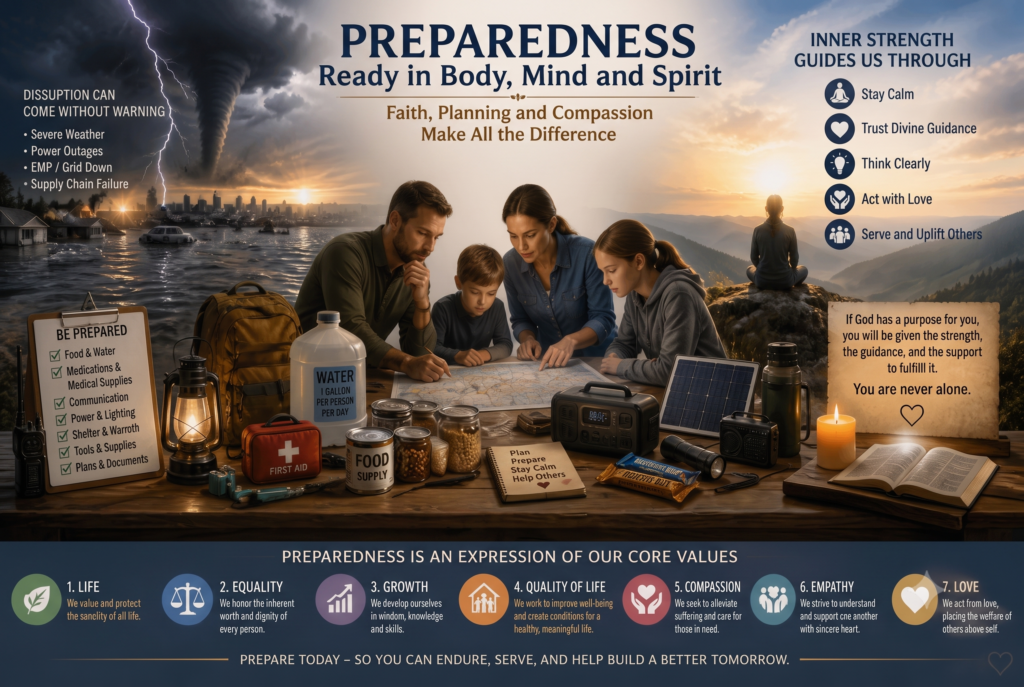
When people think about preparedness, they often think first about supplies, storage, or emergency planning. While practical preparation certainly has value, I have come to believe that one of the most important forms of preparedness is the development of inner steadiness and conscious relationship with Spirit.
When people think about preparedness, they often think first about supplies, storage, or emergency planning. While practical preparation certainly has value, I have come to believe that one of the most important forms of preparedness is the development of inner steadiness and conscious relationship with Spirit.
Supplies may help people endure temporary hardship, but spiritual grounding often determines whether individuals respond to difficulty with fear and confusion or with calmness, wisdom, compassion, and trust.
Throughout history, human beings have faced periods of uncertainty, disruption, environmental hardship, and social change. During such times, practical wisdom, supportive relationships, emotional resilience, and spiritual awareness all become important. Preparedness, in this sense, is not about fear of catastrophe, but about learning how to remain centered, adaptable, and responsible during times of transition.
For me personally, one of the deepest forms of preparation has been developing an ongoing relationship with God—the First Source and Center—as well as with Christ Michael (Jesus) and Nebadonia, understood within these teachings as a compassionate spiritual Mother presence. Through stillness, prayer, reflection, and inward listening, I have found guidance, reassurance, and a greater sense of peace during difficult periods of life.
Many people today are rediscovering the importance of inner stillness and conscious spiritual relationship. Some describe these experiences spiritually, others intuitively or psychologically. Whatever language is used, many people find that quiet reflection and sincere inward openness help reduce fear and strengthen clarity during uncertain times.
During my years in the Army, both in Vietnam and later in Europe, I experienced periods in which I functioned with remarkably little food or water. For extended periods, I rarely visited the mess hall and only occasionally ate at restaurants or the PX. Yet I continued to function well, maintained my health, and rarely experienced hunger.
Looking back, I felt spiritually sustained during that period of my life. I trusted that I would be cared for, and that confidence carried me through experiences that otherwise might have felt overwhelming. At the time, food simply did not seem as important to me as the inner sense of stability and guidance I felt within.
Later, while stationed in Germany on a border detachment and living in a small hotel, I gradually returned to more normal eating habits and enjoyed the rhythm of ordinary daily life again. Those experiences taught me that human beings are often more adaptable and resilient than they realize.
They also taught me that trust, calmness, and inner orientation can become tremendous strengths during uncertain times.
Practical preparation still matters. Modern societies are highly interconnected and occasionally vulnerable to disruptions caused by severe weather, infrastructure failures, economic instability, or other unexpected circumstances. Even relatively short disruptions can create stress for families and communities. Simple preparation can help reduce anxiety and support greater calm and stability during difficult periods.
Most households benefit from maintaining at least a modest reserve of food, clean water, medications, flashlights, batteries, and other essential supplies for temporary emergencies. Many organizations recommend maintaining at least a three-day supply of necessities, while others prefer longer-term preparation depending on individual circumstances and family needs.
Water remains one of the most essential resources. Having access to clean drinking water, along with simple purification or filtration methods, can greatly improve safety during emergencies. Portable filters, gravity-fed systems, and stored water containers are all practical options that many families find helpful.
Food preparation can also be approached thoughtfully and simply. Shelf-stable foods, dried goods, protein bars, and freeze-dried meals can all contribute to emergency readiness without creating unnecessary fear or obsession. The goal is not panic, but practical stewardship and reduced vulnerability during temporary disruptions.
Preparedness also includes relational readiness. Families benefit from discussing communication plans, emergency procedures, and ways of supporting one another calmly during stressful situations. Communities that cooperate and share resources often navigate hardship more effectively than isolated individuals acting only from fear.
In my understanding, spiritual relationship is not about fear, punishment, or religious superiority. It is about connection, guidance, growth, and learning to live with greater awareness and trust.
Ultimately, preparedness is not only about storing resources for difficult times. It is about cultivating the qualities that help human beings remain compassionate, clear-minded, cooperative, and spiritually grounded during periods of uncertainty.
The most meaningful preparation may not come from fear of the future, but from learning how to live more consciously in the present — with simplicity, stewardship, wisdom, and trust.
Practical preparation has value. Yet perhaps the deeper invitation is to strengthen the inner relationships that sustain human beings through every season of life: relationship with Spirit, with one another, with community, and with the deeper values that give life meaning.
Continue the Conversation
The future is shaped through thoughtful dialogue.
If this article has been meaningful to you, share the official Planetary Pulse link with someone who may also enjoy exploring these ideas.